Every earnings season starts with the banks. Within roughly two weeks of a quarter ending, the largest US lenders, traditionally JPMorgan Chase, Wells Fargo, and Citigroup first, with Bank of America, Goldman Sachs, and Morgan Stanley close behind, publish their results. Investors watch them closely for a reason that goes beyond bank stocks: a bank’s income statement is a snapshot of how much people and companies are borrowing, spending, and failing to pay back.
If you are new to the reporting calendar, our earnings season guide covers the basics. This article focuses on what to look for inside a bank report specifically.
Why bank results matter beyond banks
Banks sit in the middle of the economy. Their loans fund homes, cars, credit card purchases, and business expansion, and their trading desks and advisory teams see how active financial markets are. So when banks report, investors get early answers to three questions that matter for the whole market:
- Are consumers still healthy? Card spending and late payments show up here before they show up in most official data.
- Are businesses borrowing? Loan growth hints at whether companies are investing or holding back.
- Are markets busy? Trading and dealmaking revenue reflect volatility, mergers, and stock and bond issuance.
The six lines worth reading
Bank reports are long, but most of the market’s reaction comes down to a handful of numbers.
| Line | What it is | What it signals |
|---|---|---|
| Net interest income (NII) | Interest earned on loans minus interest paid on deposits | How rate changes are hitting the core lending business |
| Provision for credit losses | Money set aside for loans the bank expects to go bad | Management’s own forecast of the economy |
| Net charge-offs | Loans actually written off as uncollectable | Stress that has already happened, especially in credit cards |
| Trading revenue | Income from buying and selling stocks, bonds, currencies, and commodities for clients | How volatile and active markets were |
| Investment banking fees | Advisory fees on mergers plus underwriting fees on stock and bond deals | Corporate confidence and deal flow |
| Loan and deposit growth | Change in total loans and deposits | Demand for credit and whether customers are moving cash |
Net interest income and the rate connection
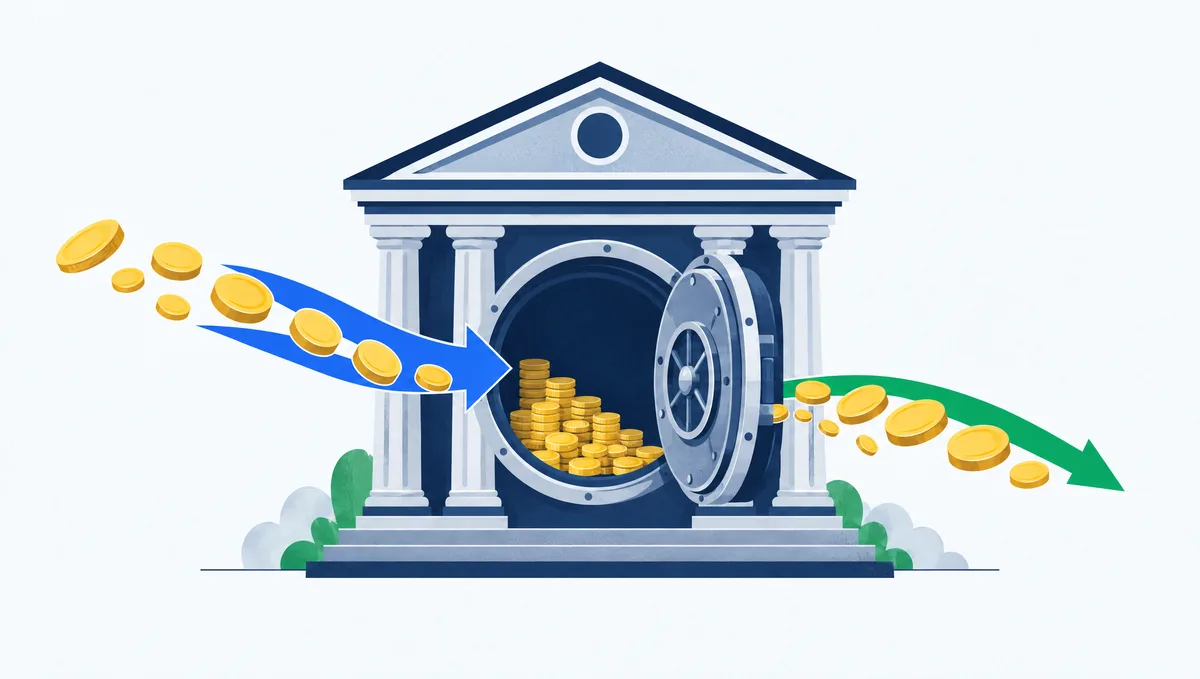
For traditional lenders, net interest income is the largest source of revenue. It depends on the gap between what a bank earns on loans and securities and what it pays depositors. When the Federal Reserve raises rates, loan yields usually reset faster than deposit rates, and that gap tends to widen. When the Fed cuts, the reverse can happen, although banks also lower what they pay on savings. Our explainer on how interest rates move the stock market covers the wider picture.
Pay attention to the full-year NII outlook that big banks often give. A raised or cut forecast for net interest income can move the stock more than the quarter that was just reported.
Provisions and charge-offs: the credit check-up
Provisions are forward-looking: a bank adds to its reserves when its economic models point to more defaults ahead, and it can release reserves when the outlook improves. Charge-offs are backward-looking: they count losses already taken. Read them together.
- Rising provisions, steady charge-offs: the bank is preparing for a slowdown it has not seen yet.
- Rising charge-offs: borrowers, often credit card holders first, are already struggling.
- Reserve releases: management is more confident, which flatters profit but is not a repeatable source of earnings.
Credit card charge-off rates are among the most closely watched figures each season because they connect directly to household finances and the job market.
Trading and dealmaking: the market-activity gauge
Banks like Goldman Sachs and Morgan Stanley earn much more from markets than from ordinary lending. Trading revenue tends to rise when markets are volatile and clients reposition. Investment banking fees rise when companies feel confident enough to merge, go public, or issue bonds. A strong quarter for dealmaking is often read as a sign of corporate optimism; a slump can signal that executives are waiting for clarity.
Why the stock reaction can surprise
As with any company, bank shares react to results versus expectations, not to the results alone. A bank can beat profit estimates thanks to a one-time reserve release or a tax benefit and still fall if net interest income guidance disappoints. Our piece on why a stock can fall after beating earnings explains the pattern. With banks, the earnings call often matters most, because chief executives comment on the consumer, the economy, and regulation in ways analysts quote for weeks.
What this means for you
You do not need to own bank stocks for bank earnings to be useful. A simple checklist for each report:
- Check net interest income against the prior quarter and any change to the full-year outlook.
- Compare provisions with charge-offs to see whether the bank expects credit to get worse.
- Note what the CEO says about consumer spending and borrowing.
- Look at trading and investment banking fees for a read on market activity.
- Watch the economic calendar too: inflation and jobs data in the same weeks can matter just as much.
The bottom line
Bank earnings open each reporting season and double as an economic check-up. Net interest income shows how rates are flowing through, provisions and charge-offs show the health of borrowers, and trading and dealmaking revenue show how busy markets are. Read the guidance and the call, not just the headline number. This article is for education only and is not investment advice.