Some of the most important numbers for the entire technology sector are not revenue or earnings. They are the capital expenditure plans of a handful of giant companies. When those plans rise or fall, stocks from chip designers to power utilities react.
Who the hyperscalers are
“Hyperscaler” refers to companies that operate data centers at enormous scale. The term usually covers the major cloud providers, Amazon (AWS), Microsoft (Azure), and Alphabet (Google Cloud), along with Meta, which runs vast data centers for its own apps and AI models. Oracle and other cloud and AI infrastructure providers are also significant spenders.
Where to find capex
Capital expenditures appear in the cash flow statement, usually labeled “purchases of property and equipment” or similar. Some companies also include assets acquired through finance leases, so check the notes to see how each company defines its capex figure. Management typically discusses spending plans on the quarterly earnings call, often giving a range for the full year or a direction for the next year.
Where the money goes
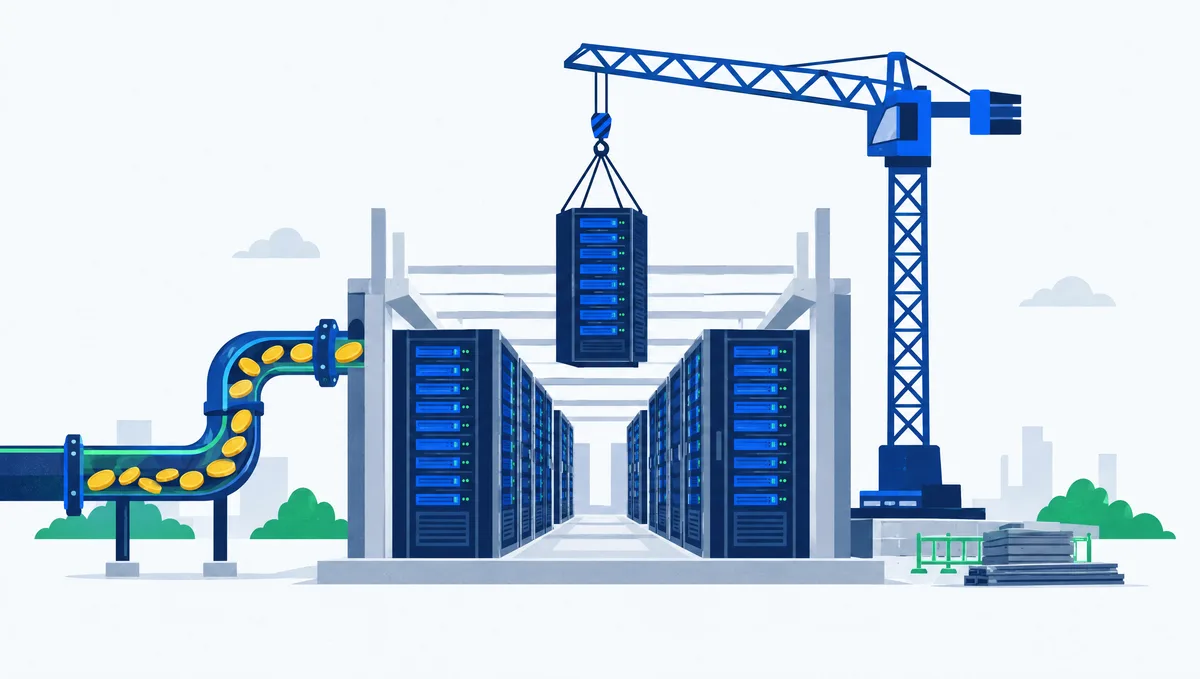
AI data center spending flows to a wide web of suppliers:
- Accelerators and chips: GPUs, custom AI chips, CPUs, and memory.
- Networking: switches, optical transceivers, and cables that connect servers.
- Servers and storage: the systems that house the chips.
- Buildings and power: construction, electrical equipment, cooling systems, and electricity supply.
This is why a capex update from one hyperscaler can move stocks across semiconductors, industrials, and utilities on the same day.
The return-on-investment debate
The central question for investors is whether this spending will earn an adequate return. Bulls point to growing cloud revenue, rising AI product usage, and productivity gains. Skeptics worry about overbuilding, rapid obsolescence of AI hardware, and uncertainty about how much customers will pay for AI services. The debate matters on both sides: suppliers benefit from higher capex, while the spenders’ own shareholders want to see the investment pay off.
What to watch in the numbers
- Capex guidance changes, especially surprises relative to analyst expectations.
- Cloud revenue growth and any disclosed AI revenue contribution.
- Depreciation: today’s capex becomes tomorrow’s depreciation expense, which weighs on reported margins over time.
- Free cash flow: heavy capex reduces the cash available for buybacks and dividends.
- Capacity constraints: comments that demand exceeds available capacity signal continued spending.
Why it matters beyond tech
Because the largest tech companies make up a large share of the S&P 500, and their suppliers add more, the AI spending cycle has an outsized effect on the index as a whole. For how that concentration shows up in market data, see market breadth explained, and for the chip side of the story, read what drives AI chip demand.